

 LinkedIn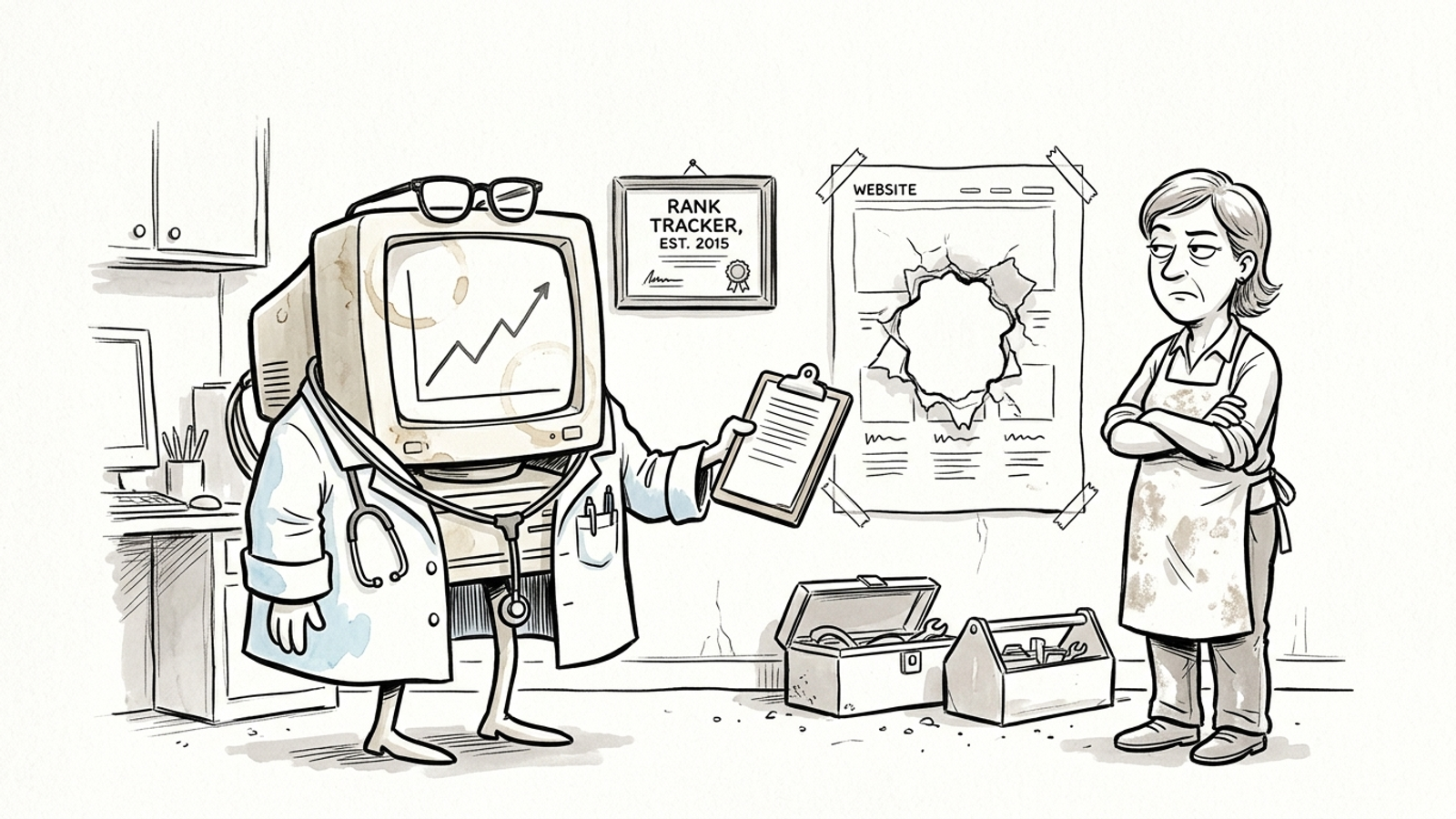
AI visibility platforms are selling 2015 rank tracking in a 2026 lab coat. I know the pitch: 50 prompts, a share-of-voice chart, an alert when a competitor gets cited, and no clear answer to what changes on your site next.
Ask what happens in the first 30 days. The dashboard tracks whether ChatGPT names you. It does not write the page that would give ChatGPT a reason to name you. It bills you monthly for the counting and leaves the fixing to you. By the time you notice the difference, you may have paid for months of increasingly detailed evidence that the same pages still need work.
Here is what these tools do under the branding. They take a fixed set of prompts, send them to ChatGPT, Gemini, Perplexity and AI Overviews on a schedule, then record whether your name appeared, which URL got cited and how you sound next to competitors. The category defines itself as rank tracking for AI answers, built around mention rate, citation rate, share of voice and sentiment. I used to build the same thing in rank trackers in 2015. Back then, we called it rank. Now we call it voice.
The pricing tells you what you are buying. Entry tiers cluster at $29 to $199 a month for monitoring: Otterly at $29 for 15 prompts, Peec at $95 for 50, with add-ons for extra engines. One $95 starter plan covers 50 prompts, one project and three of six models. It offers analytics, not content creation. Prompt count is metered like keywords used to be. Pay more, count more sentences. Nothing gets written, fixed or published.
That would be fine if it were sold as counting. It is sold as getting you cited. Owners hear visibility platform and assume something will become visible. What arrives is a chart proving they are invisible.
What the deck says vs. what the tool does
Share of model voice is a count
The tool asks ChatGPT the same question 30 times. You appear in 9 answers. Your chart says 30 percent. That number feels like market share, but it tells you only what happened in those answers. It does not tell you what to change.
One practitioner guide puts it plainly: visibility tracking does not automatically tell you the fix. You still need content updates, authority work, citations and technical fixes to turn that chart into anything a buyer sees. Until that work happens, the line can move for reasons that have nothing to do with your site: a model update, a reworded answer, a competitor publishing one good page. If the number rises, you still need to know why. If it falls, you still need to decide what to do. The graph makes neither decision for you.
I used to tell clients to watch impression share the same way. I was wrong. Watching never moved it.
Prompt intelligence is a list of questions
The second selling point is a prompt list. Fifty buyer questions, clustered and scored, presented as if discovering them was the hard part. It was never the hard part. An owner can usually tell you what buyers ask. The harder question is what kind of page gets cited when they ask it.
HubSpot’s 2026 data makes that distinction concrete: blog posts hit a 42% citation rate in AI Overviews, while news sat at 5% and PR at 6%; comparison content hit 95% on ChatGPT. A list of 50 prompts with no content work behind it changes none of that. It may show that buyers ask for a comparison while your site offers only a generic service page. Fine. Now someone has to make the comparison worth quoting. You can pay $95 a month to learn which questions you lose. The list is not the answer.
Actionable insights is homework handed back to you
This one annoys me most. The report ends with recommendations: add schema, improve E-E-A-T, build authority. Then it stops. A cross-tool test of more than 40 tools found the same pattern: most GEO tools stop at a visibility score and competitor chart, leaving you to work out the next step. Even tools that promise actions can deliver a list without a way to carry it out. Calling a recommendation actionable does not assign anyone to open the CMS, make the change or check what happened after publication.
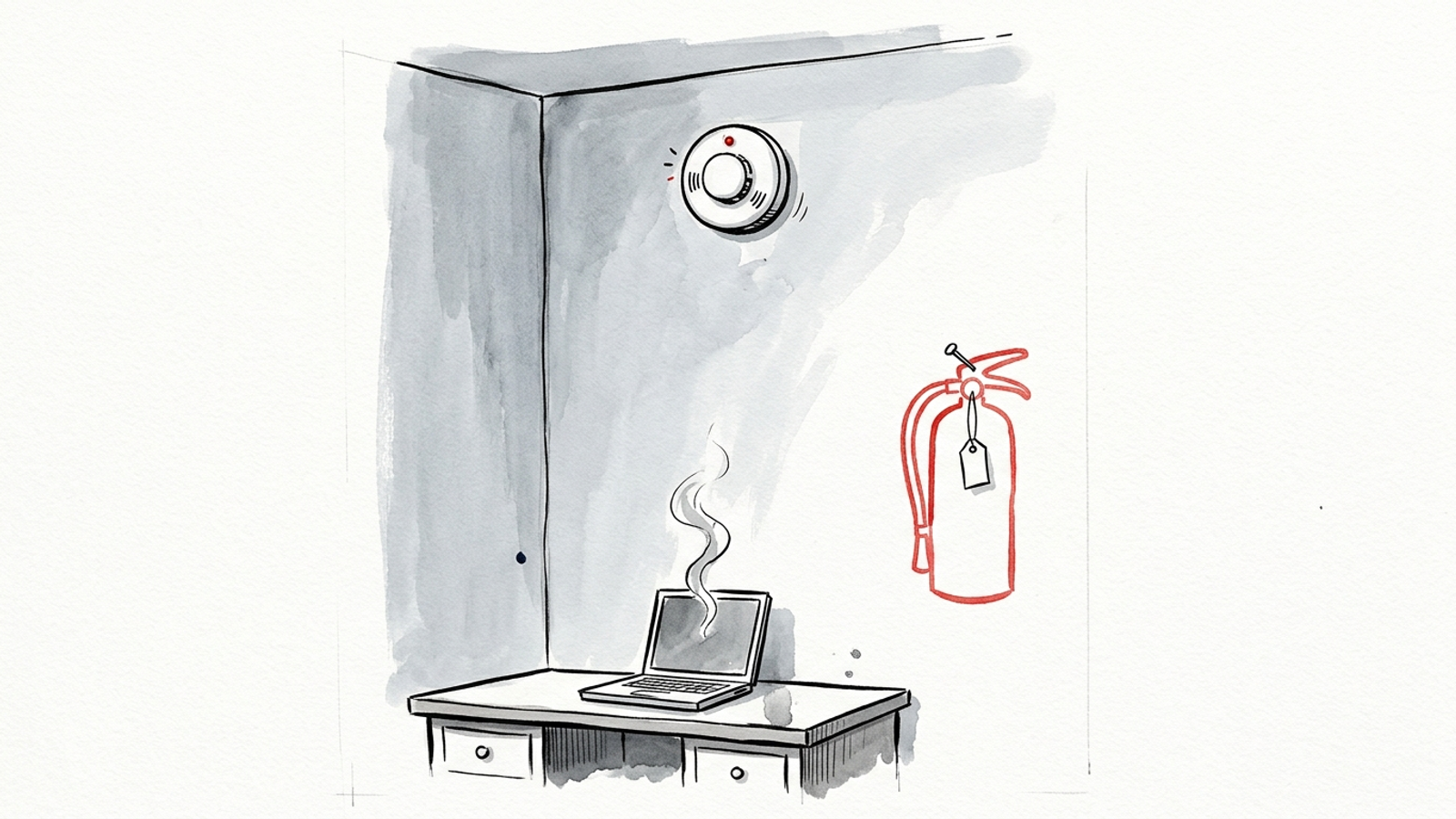
Scrunch is a clean example. At $300 a month with no free trial, it reports mentions and recommendations but provides no audits, schema work or workflows to fix gaps. That is a smoke alarm with no extinguisher. Useful if you already own extinguishers and enjoy alarms. A small team without the people to do the work gets a different deal: another task list, now with graphs.
Month four is when the distinction becomes hard to ignore. The chart looks professional. Nothing on the site changed.
Why counting sells: fixing takes work
Schedule the same prompts, record the answers, chart the mentions. Once the dashboard exists, you can sell more counting by metering prompts and adding engines. You do not need a writer to rewrite a service page or a developer to remove a crawl block. That is an attractive product model. It is also a narrow one.
Fixing means opening the CMS. Rewrite the page so an answer engine can quote it. Add the comparison table. Clean the HTML. Earn the citation link. HubSpot’s 2026 playbook draws a similar line: most tools answer “are you cited?” while its research layer examines what cited content looks like by scraping cited URLs. One side asks a question. The other points toward work someone still has to do. A report can identify a missing comparison page; it cannot pretend the page exists because it put the gap in a colored box.
So vendors sell the query and call it the work. I do not think every founder behind these tools is cynical. I think fixing is harder to package as a prompt allowance, so it gets defined out of scope. Your problem is that the excluded part is the part that can change what buyers find.
A mention rate never booked a job. A rewritten service page might.
When a tracker is worth the invoice
I own a smoke alarm. I also own an extinguisher. That is the setup where the alarm makes sense.
Monitoring alone is the right purchase when you already have people who do the fixing. Say you run an in-house content team of three and an SEO lead who ships pages every week. A $95 tracker that tells them which prompts slipped can point an existing crew toward the next page. Same for an agency watching 30 client accounts for citation drops. They buy the radar because they own the planes.
If you do not have that crew, do not buy the radar. You are the plumber with one van, the ecommerce founder doing support at midnight, the marketing lead who also runs events. An alert that says you lost three prompts on Tuesday gives you another thing to worry about. It does not give you a page to publish. Worse, the alert can feel like progress because someone is finally watching the problem. The problem is still sitting in the CMS.
You do not need earlier warning. You need someone to rebuild the page.
Ask who will change the site
Ask this on the demo before you talk about price: What will be different on my site in 30 days, and who does it? Not what will I see. What will be different. Which pages get rewritten? Which new pages get published? Which technical block gets removed? Then settle the pronouns. Does your team mean the vendor’s team or yours?
If the answer is “your team, with our guidance,” you are buying homework. Homework is fine when you have staff to do it. If you do not, a list of assignments is not a solution. Ask where the handoff ends. A recommendation in a dashboard and a published page are not two versions of the same deliverable.
A straight answer has nouns and dates: four service pages rewritten with quotable answer blocks by week two; one comparison page for the competitor you keep losing prompts to by week three; crawl blocks and duplicate titles cleaned before anything publishes. A vague answer has verbs. Monitor. Surface. Empower your team. When I hear empower your team, I hear you pay us while your team does the job.
I ran accounts where clients paid for vigilance. Vigilance mattered. But watching search terms did not rebuild a campaign, and watching a citation chart does not rebuild a site. I keep a short list of what counts as fixing because the sales language blurs it:
- Rewrite a page so its opening answers the buyer’s question in a clean sentence an answer engine can quote.
- Replace a generic paragraph with a comparison table where comparison is what the buyer needs.
- Remove dead weight such as crawl blocks, duplicate titles or JavaScript that hides the answer from the bot.
- Publish a page for a prompt cluster you keep losing, then work to earn a citation on a site the engines already trust.
That is cause before effect. Give an engine something quotable and a path to read it. Then measure whether it quotes you. A chart cannot do the first part, however lovingly someone has labeled its axes.
That is the standard I hold tools that claim to get you featured in Google AI Overviews against. groas works on the other side of the line. Content, technical fixes and citations ship during the sprint, with weekly tracking across Google and the AI engines, logged actions and a human strategist owning the outcome. New pages go up daily instead of quarterly. The report shows where you were named and what moved. The work behind the report is the product.
If a vendor cannot point to pages shipped and blocks removed, you are not buying visibility. You are renting a mirror.

Pay for changes, not charts. If nothing on your site is different in 30 days, cancel the dashboard and hire the work.
I still keep an old rank tracker login around, the kind that counted keywords in 2015. It did one thing honestly. It said you rank fourth. It never claimed to write the page that would get you to first. The new dashboards do the same counting with better fonts. They tell you which prompts triggered a brand mention last Tuesday. They show the gap where a competitor got cited and you did not. Useful diagnostics. Dead as deliverables.
I learned that running PPC: the watching was cheap; the rebuild was the work that mattered. If you are shopping for software that gets you into AI answers, stop asking which platform tracks more models. Ask which one leaves pages behind. A tracker that covers six engines and ships nothing is still a tracker. A service that rewrites the pages, publishes the comparison you keep losing and clears the crawl block has something to show besides a line.

My rule now is simple. If the invoice arrives and the site looks the same as last month, you bought counting. Put the money toward a page that answers a buyer’s question better than the competitor getting cited. Count what changed after that.
A line chart in a lab coat still cannot rewrite a page.